Foul weather or foul play
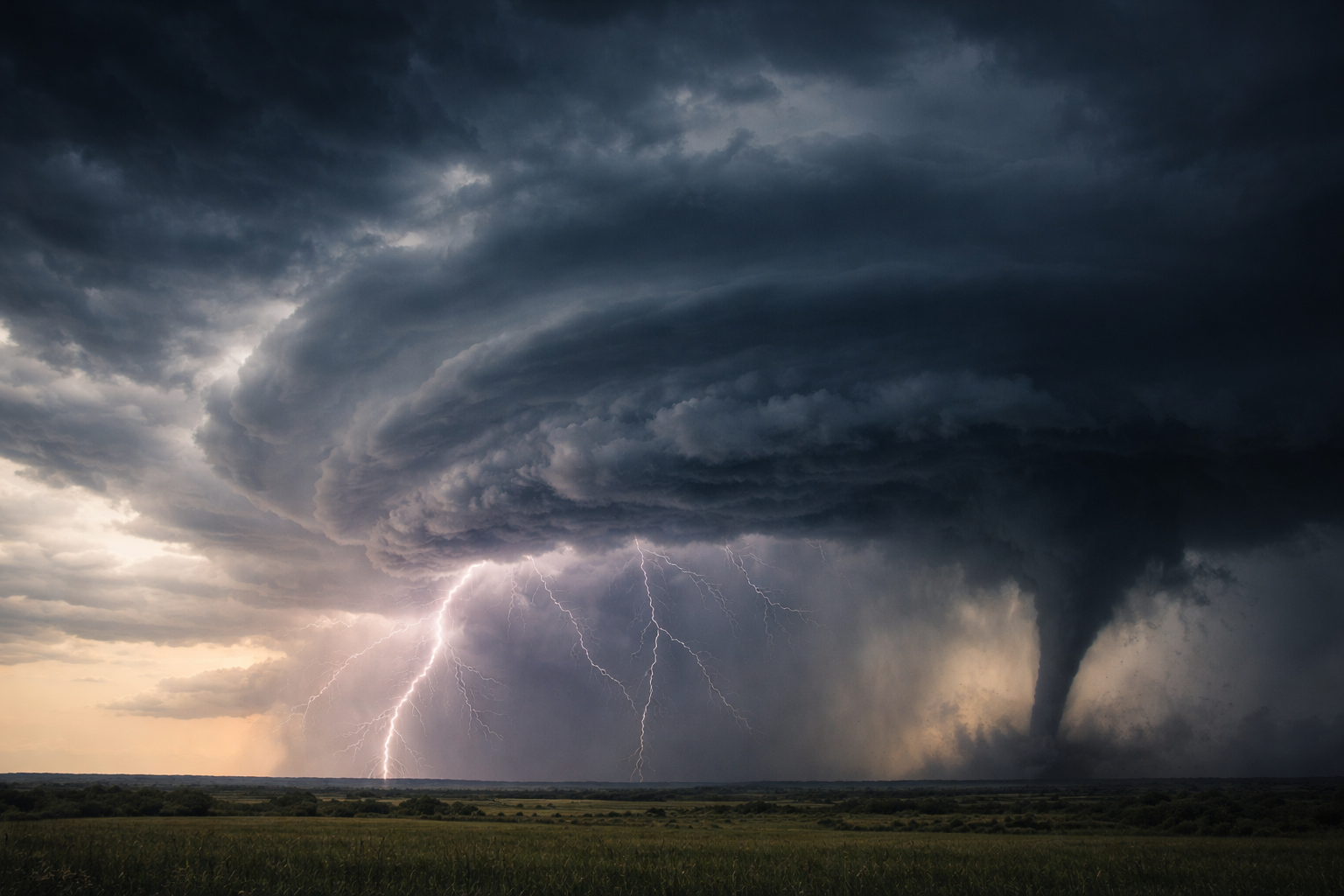
The real science—and the fiction—behind weather manipulation
Writers have always been fascinated by the weather. Not because it’s unpredictable—but because it isn’t entirely. The atmosphere follows rules. Thresholds. Patterns. And once you start reading about how storms actually form, it’s hard not to wonder: What if someone learned how to nudge those rules instead of breaking them?
That question sat quietly in the back of my mind long before it ever made its way into a manuscript.
This post isn’t about how to manipulate the weather. It’s about where science genuinely ends, where fiction begins, and why that boundary matters.
What science really says: weather isn’t chaos—it’s conditions:
Despite how it looks from the ground, most severe weather depends on a precise alignment of ingredients, not random violence.
Meteorologists look for things like:
Instability – warm, moist air rising beneath cooler air
Lift – a trigger that forces that air upward (fronts, terrain, pressure changes)
Moisture – sufficient atmospheric water vapor
Wind shear – changes in wind speed or direction with height
When these elements align naturally, storms form. When they don’t, nothing happens—no matter how dramatic the sky looks.
That’s an important distinction: storms are not “created.” They are released.
Scientists can already observe these thresholds with remarkable precision. Doppler radar, satellite imaging, and atmospheric modeling allow experts to see when conditions are close—sometimes hours in advance. What science does not currently allow is intentional, localized control of those thresholds at scale.
Where real research brushes the edge:
There are legitimate, limited experiments in weather influence—mostly aimed at mitigation, not creation.
Cloud seeding has been studied for decades to encourage precipitation under already-favorable conditions. Results remain mixed and modest.
Military and academic research organizations like DARPA study atmospheric modeling, signal disruption, and environmental sensing—but not storm generation.
The takeaway is crucial: Modern science can observe, model, and sometimes marginally influence weather, but it cannot command it.
Which is where fiction steps in.
The leap I took in the story (and why it works on the page):
In the novel, I imagined a system that doesn’t invent storms, but forces alignment.
That fictional leap rests on three liberties:
Precision timing:
In reality, atmospheric triggers are messy and diffuse. In the story, they’re synchronized with impossible accuracy.Localized influence: Real weather systems operate across miles. Fiction allows for influence within a sharply defined radius.
Removal of inhibition:
Meteorologists talk about “capping” layers—conditions that suppress storms even when other ingredients are present. In the book, that cap can be selectively weakened.
None of this exists as a deployable technology. It borrows language from meteorology, but the mechanism itself is invented and that distinction matters.
Why this stays firmly in fiction:
Even small real-world attempts to alter the weather raise serious concerns:
Unintended consequences downwind
Attribution problems (Was that storm natural?)
Ethical and legal questions across borders
The atmosphere doesn’t recognize jurisdiction. Any meaningful manipulation would be global in effect, even if intended to be local. That’s why the concept belongs where it’s safest: on the page.
Why writers are drawn to this idea:
Weather is the ultimate neutral force, until someone believes they can interpret it, read it, or use it. That belief is where tension lives. Not in the storm itself, but in the human certainty that the rules can be bent without consequence.
Final thought:
The most unsettling part of weather manipulation isn’t the technology. It’s the mindset—the moment someone stops asking whether they should interfere, and starts focusing only on whether they can.
And that’s a question fiction has been exploring long before science ever got close enough to make it uncomfortable.